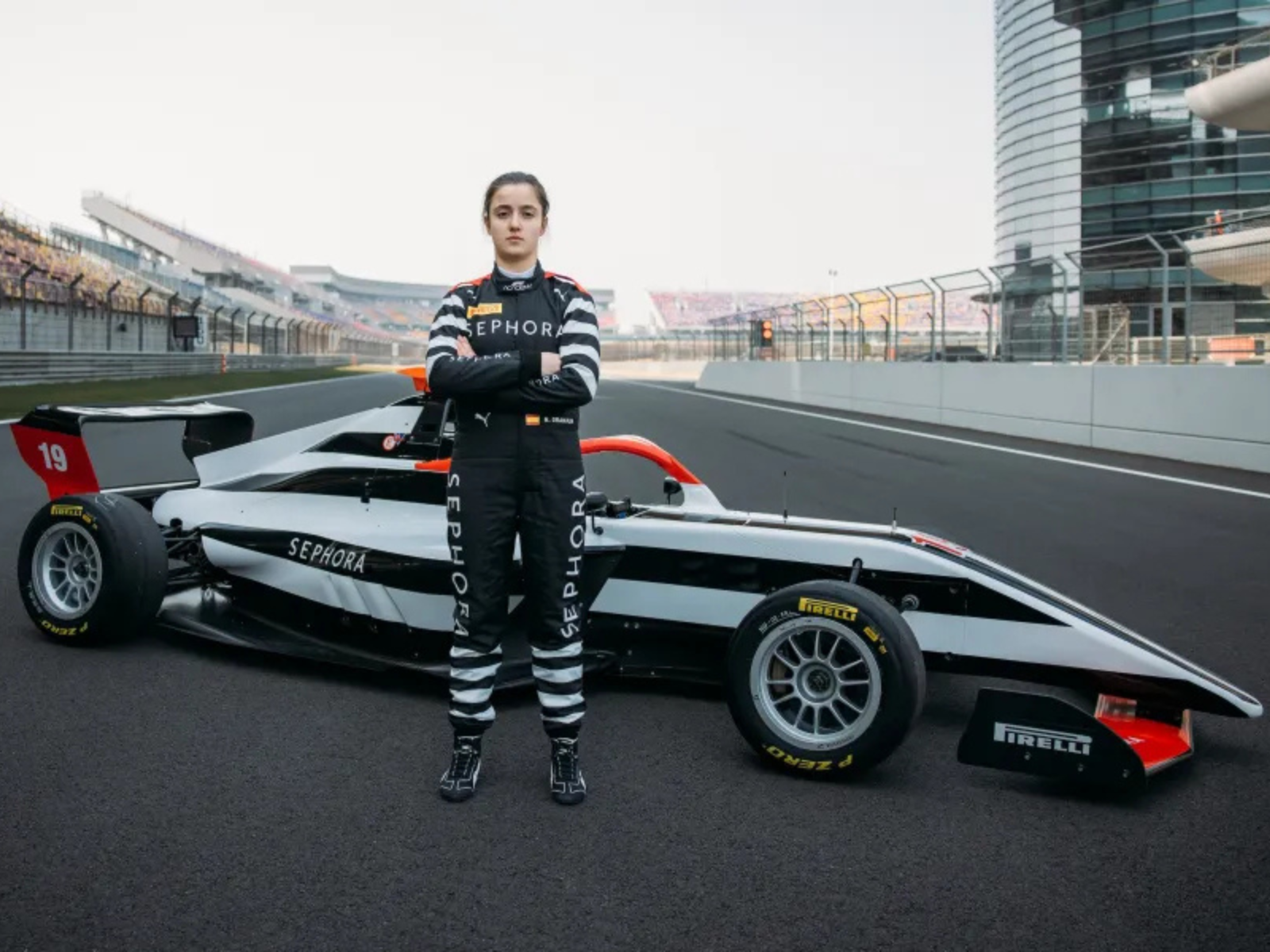
Sephora has announced a multi-year partnership with F1 Academy. the women’s racing championship founded by Formula One Group. The beauty retailer will appear on a dedicated branded car driven by Spanish driver Natàlia Granada and will activate at races with client facing beauty bars.
Sephora x F1 Academy.
Beauty in motorsport accelerates.
“Emerging leagues are about identity.
The brands that get it right don’t just partner the sport -
they grow with it.”
What happened?
On March 11, Sephora took another step in its growing sports strategy. After partnering with women’s leagues in softball and entering the NBA through a fragrance partnership, motorsport has become the latest brand’s latest cultural and growth bet. Women are the fastest growing audience in Formula 1, now accounting for just over 40% of its’ fan base - in some markets doubling over the last 5 years - where under 24s are the fastest growing segment. Sephora joins brands like Charlotte Tilbury, Wella Professionals and Louis Vuitton in entering the F1 ecosystem.
Why is this important?
F1 Academy gives Sephora access to a younger, female fan base that consumes sport differently: through social media, streaming, documentary storytelling and influencer content. In short, they are more digitally engaged and global - which is why beauty brands are showing up on the grid. Sephora is not the first beauty brand in the space, Charlotte Tilbury has already established a brand partnership centered on confidence and empowerment. Sephora, however, is entering as a retail platform. With beauty bars at races, social activation and fan experiences, the brand will be directly inside the culture of the sport - not just connected to it, but participating in it.
What should brands do?
Notice and harness the power of emerging leagues within sports. In mature sports, assets are fixed and commercial models are established, where the primary consumption model is still largely to sit and watch. Emerging leagues are different. They are more open to being shaped - both commercially and culturally - and they are often built around identity, participation and community. This can create a deeper and more targeted relevance, which is not just about fitness. Outside motorsport we have seen Nike and Skims connected to Basketball, Visa to Football and Maybelline to Lacrosse. Traditional metrics like reach still matter, but brands should pay attention to evangelists, participation and community influence.
Alternatively?
There is risk. Many emerging leagues fail within their first 5 years. Communities can shift, attention can move elsewhere and partnerships can become unsustainable. At the same time, exiting too early can create reputational damage. Choosing the right league - and focusing on meaningful early impact - is critical.
Read next: The happiest countries are not ahead, they simply have less friction.
Email subscribers receive exclusive perspectives - sign up here.