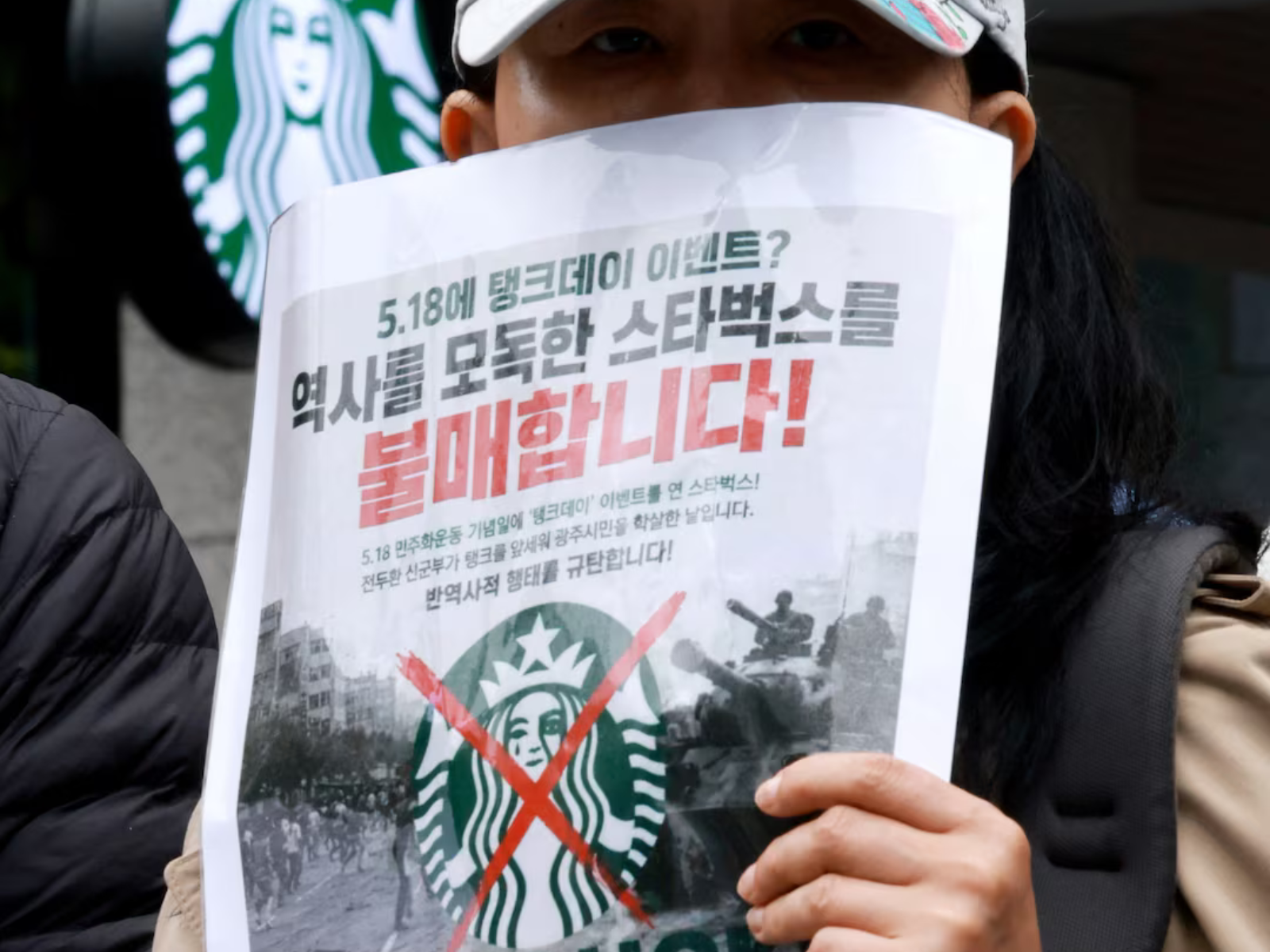
Tank Day:
The cost of cultural blind spots.
On 18 May, Starbucks Korea, operated by Shinsegae Group under license from Starbucks, launched a promotional campaign called “Tank Day”. AI was involved. Outrage and public condemnation followed. What went wrong?
“Approval processes should not be only compliance mechanisms - they should act as cultural filters.”
What happened?
The campaign promoted a new large tumbler using the slogan “Thwack it on the table.” Unfortunately for Starbucks, this is a loaded phrase in South Korea - it directly echoes the language used in the police cover-up of the 1987 torture and death of student activist Park Jong-chol. The exposure of that cover up became a defining moment in South Korea’s democracy movement. The phrase is documented, taught and remains part of the living memory for millions of South Koreans.
The date made matters worse. 18 May is the anniversary of the Gwangju Uprising, when the military government of Chun Doo-hwan deployed tanks to suppress pro-democracy demonstrations. Records show that more than 500 civilians were killed or later died from their injuries, while dozens more went missing.
The backlash was immediate. Within hours, the Starbucks Korea CEO was fired. The Chairman of Shinsegae Group issued not one, but two public apologies. Starbucks Global apologised. The South Korean president condemned the campaign. The Interior Minister banned Starbucks products from government events, and the Ministry of National Defense suspended a partnership.
An internal investigation revealed that AI had been used to generate campaign name suggestions. Executives acknowledged that the historical significance of the date had not been recognised during planning. At a press conference eight days later, Shinsegae executive Jeon Sang-jin admitted that “priority was given to speed” and “not a single objection was raised during the planning or approval stages”.
Seven people approved the campaign, and the standard legal review process was skipped.
It is not clear whether the name used was one generated by AI.
Why is this important?
South Korea is Starbucks’ third largest international market, and estimates suggest the campaign cost more than $5 million in lost revenue. The governance failures are obvious. The more interesting question is why the cultural significance of the date was absent from the approval chain in the first place.
At the press conference, executives acknowledged that the campaign “exposed a lack of social and historical sensitivity” within Starbucks Korea.
Approval processes are not only compliance mechanisms - they are cultural filters.
Every brand operates in a market shaped by history, politics, identity and collective memory. Those forces often stay invisible until they are triggered. The role of governance is not to slow organisations down - it is to ensure that blind spots are seen, and speed does not outrun judgement.
Is AI to blame?
No. AI may have generated campaign suggestions - we don’t know whether any were used. I wonder if perhaps too much trust was placed in AI to carry cultural memory - that is where risk emerges. AI should not be expected to catch historical or cultural weight. That responsibility must remain human.
Read next: The Pope on AI: Responsibility over mastery.
Email subscribers receive exclusive perspectives - sign up here.
Sources