Signals & Moves
Running, Reputation and Responsibility.
Wednesday 5 August
1
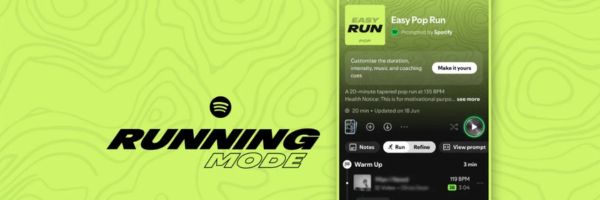
Move: Spotify relaunches Running Mode.
On 30 July, Spotify brought back Running Mode. When it launched in 2015, it used your phone sensors to match music in the moment to your running pace. The feature disappeared in 2018. Now, eight years later, it has returned. Users simply select their target beats per minute and workout, and Spotify builds the soundtrack.
Signal: Timing is becoming more valuable than technology.
Spotify’s Running Mode is now less sophisticated than the original, despite technology advancing. In 2015, running was exercise. Today, it’s identity: running clubs are social events, leggings have become everyday fashion and fitness trackers are status symbols. Culture changed before the technology did. Spotify did not need a better version of its original idea, it just needed the right moment to bring it back.
Are we looking at personalisation incorrectly?
Perhaps. We’ve been focusing on understanding people, when the growing opportunity is understanding moments. Spotify doesn’t need to know you’re a runner, it only needs to know when you ARE running. Recognising when someone needs you is becoming more valuable than knowing their age and preferences.
2
Move: South Korea launches “K-Brand Guardian Angels”.
South Korea has launched a pop-up campaign to protect K-Beauty from counterfeit products following them into overseas markets and online, bringing together government, academics and consumer groups outside an Olive Young flagship store.
Signal: Brand equity has become a national asset.
K-Beauty is no longer just an export industry, it has become part of Brand Korea. Protecting it is about more than commercial interests, it is about protecting the country’s reputation. Governments have always guarded national assets, South Korea is treating brand equity as one of them.
Is South Korea ahead of other countries?
Countries have always safeguarded geographical products, like Champagne and Scotch Whisky. What is new is safeguarding an entire commercial category. K-Beauty is not one brand, it is an ecosystem. South Korea is not unique, but it is moving sooner than others. It is not defending a skincare company, it is defending a national competitive advantage.
3
Move: EU AI Act transparency rules take effect.
From 2 August, Chatbots must disclose they are AI, deepfakes require labels and AI generated content must be flagged unless a human takes editorial responsibility. Non compliance risks fines and the rules are already in force, though generative AI providers have until December to comply.
Signal: People expect to know about how things are made.
Food lists ingredients and cosmetics declare their contents, AI is following the same path. Labels reduce uncertainty and tell us details we cannot see ourselves. Content will openly declare how it was created, making brands responsible for the AI they choose to use.
Why do we need to know?
Not because AI is dangerous, but because people expect transparency. We label products so people can make informed decisions for themselves. How people respond to that disclosure will reveal how they really feel about AI: trust, indifference or avoidance?
Help House of Client grow by forwarding this email to one person today.
Noorin
Image reference: Spotify.
Sources: Spotify Newsroom, CompsMag, Korea Times, AG-IP-News, Seoul Economic Daily, Cooley, European Commission