Signals & Moves
Recognition, reading and resistance.
Wednesday 1 July
1
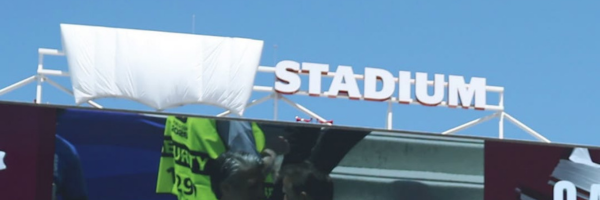
Move: FIFA covers Levi’s Stadium branding.
FIFA’s “clean venue” rules required every 2026 World Cup host stadium to cover branding from non-partner sponsors. At Levi’s stadium in Santa Clara workers covered the brand’s iconic batwing shaped logo with a plain white tarp - but it still remained instantly recognisable. Rather than complain, Levi’s responded by covering up its logo globally across stores and online to match, posting a Reel to the viral “Nobody’s Gonna Know” tune. The Instagram post received more than 700,000 likes within 24 hours.
Signal: The strongest logos no longer need to be seen.
Branding is almost always about increasing visibility, Levi’s has proved the opposite. The measure of a logo is not always about whether people can see your logo, but whether they know it when they can’t. Levi’s recognised that the rule itself was the campaign opportunity.
What is a brand?
A logo is a shape, a font, a colour. What makes it valuable is what it triggers in people’s minds. FIFA’s removal of the logo revealed the value that had been built behind it. It tested Levi’s, and Levi’s passed.
See the Levi’s Reel here.
2
Move: Aesop replaces product with books at two stores in China.
Aesop has reopened its travelling Women’s Library in Chongqing and Wuhan, removing products from shelves and replacing them with a curated list of 36 books. Nine women from academia, art, film and science serve as “Reading Leaders”. The initiative began in Melbourne in 2008.
Signal: Removing the sell is what makes the cultural claim believable.
Retail is always trying to increase dwell time with cafés and experiences. Here, Aesop did not add, it subtracted - taking away the product entirely and making its cultural positioning believable. By removing the transaction, Aesop made the client relationship feel genuine.
Should stores even try to sell?
Yes - just not all the time. When someone tries too hard to sell you something, you instinctively wonder why - that’s human behaviour. Aesop understands that culture builds trust, and trust sells more than persuasion. For Aesop, this was business as usual.
3
Move: Polaroid launches a new billboard campaign critiquing data centres.
Polaroid has launched a new outdoor campaign with the theme: The Best of Summer Is Analog. It takes aim at AI and big tech with billboards that say “Go jump in some water before the data centres drink it all up”. The campaign runs across New York and London.
Signal: Analog no longer sells nostalgia, it sells cultural resistance.
Polaroid is not asking people to relive the past. It is positioning analog as an alternative to an AI powered future. Polaroid is clearly stating what it isn’t: energy intensive, data hungry, and algorithmically driven.
Has nostalgia become a protest?
Nostalgia is not the protest - analog is. Analog brands no longer need to justify themselves by looking at the past, they can do it by critiquing the future. How a brand embraces AI is no longer about technology, it has become a statement about values.
Want more? New to The Feed: FIFA’s World Cup. Seattle’s rules. Whose culture wins?
Help House of Client grow, share this email with those who would enjoy it.
Noorin
Image reference: Creapills instagram.
Sources: Yahoo! Sports, Sponsor cover-ups…, Inc.Com, With Zero Words, Levi’s turned…, Dao Insights, Aesop turns brand spaces…, Retailboss.co, Aesop Debuts in Chongqing, Polaroid press, Famous Campaigns, Polaroid turns data centre…