Signals & Moves
Made in China, Muse and Matches.
Wednesday 30 September
1
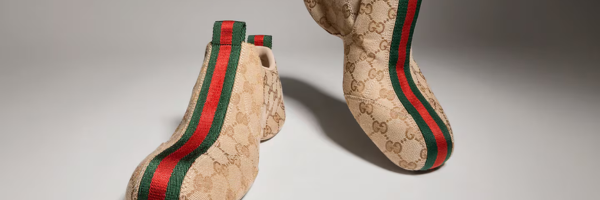
Move: Gucci makes a sneaker in China.
Gucci’s new Drip sneaker, the first from Creative Director Demna, is manufactured in China, and appears to be first shoe in the House’s 105 year history to be made outside Italy. Gucci says the decision was driven by the manufacturer’s technological expertise, not cost, but has not shared what that technology is. The shoe is cheaper than many of its other sneakers. Gucci’s sales have halved over the last three years.
Signal: “Made in Italy” means more than a location.
“Made in Italy” stands for craftsmanship, quality and luxury. “Made in China” does not, yet, carry the same meaning, but China has developed sophisticated expertise and credible home grown-luxury names like Laopu Gold and Songmont. It’s a risky move, Gucci is asking us to separate Italian identity from manufacturing, at a time when it cannot afford to dilute either.
What matters more: where a product is made or how well it is made?
Great question, and one very suited to luxury. Gucci has exposed an interesting tension in the value of provenance. The move challenges two learned assumptions: that Italy means superior quality and China means lower cost. This is disruption.
See Signals & Moves Edition #8: Meaning, Mythology and Momentum featuring Laopu Gold
2
Move: Meta launches its AI agent Muse as a cute character.
Meta launched Muse on 8 September as a personal AI agent that can act on your behalf. Two weeks later it gave it a name: Jolly, who is a small character with an oversized head, expressive face and a furry body that looks like something you would clip to a handbag. This is a language we know well: cute, approachable, huggable and collectable.
Signal: We are not afraid of cute.
As the fear around AI is growing the visual language around it is becoming more friendly and more cute. We approach and play with cute things. We name them and become attached to them. Meta’s Chief AI Officer called Muse a “harmless buddy” and this matters, because it makes us forget how powerful it is.
When does cute become manipulative?
A cute exterior can create a mismatch between what something looks like and what it is capable of. Muse is not a toy, it is an AI agent designed to know us and act for us. Cute is not neutral, it encourages trust – but does it really matter? Cute is a tactic, and we seem to like it.
Read Meta’s Muse announcement
3
Move: A new dating app asks other people to choose your matches.
Rivet, a new dating app launched by Taru Kapoor after eight years at Tinder, has ignored the defining mechanics of swiping and matching. Instead of choosing potential partners yourself, users act as matchmakers by recommending people to each other. Any potential pairing must be endorsed by a number of people before the introduction is unlocked.
Signal: Technology still needs a human matchmaker.
Dating used to come with context. Friends introduced friends, families made introductions and people met through places and activities that gave them a common foundation. Someone or somewhere knew both people. Dating apps removed that filter. Suddenly we could access hundreds of people, helped by an algorithm. Choice grew, but context was lost.
Won’t humans reintroduce bias?
Yes, but is that a bad thing? When you lose people you lose some judgement, trust and reassurance. Rivet is putting the human back in, but that comes with a trade-off. If you want context, you have to let go of some control.
See Rivet Dating
Thank you for reading.
Help House of Client grow further by forwarding this email to others.
Noorin
Read past editions of Signals & Moves
Image reference: Gucci
Sources: Reuters, Business of Fashion, Meta Newsroom, TechCrunch, Axios, Bloomberg