Signals & Moves
Gold, Goodbyes and Getting Home.
Wednesday 14 October
1
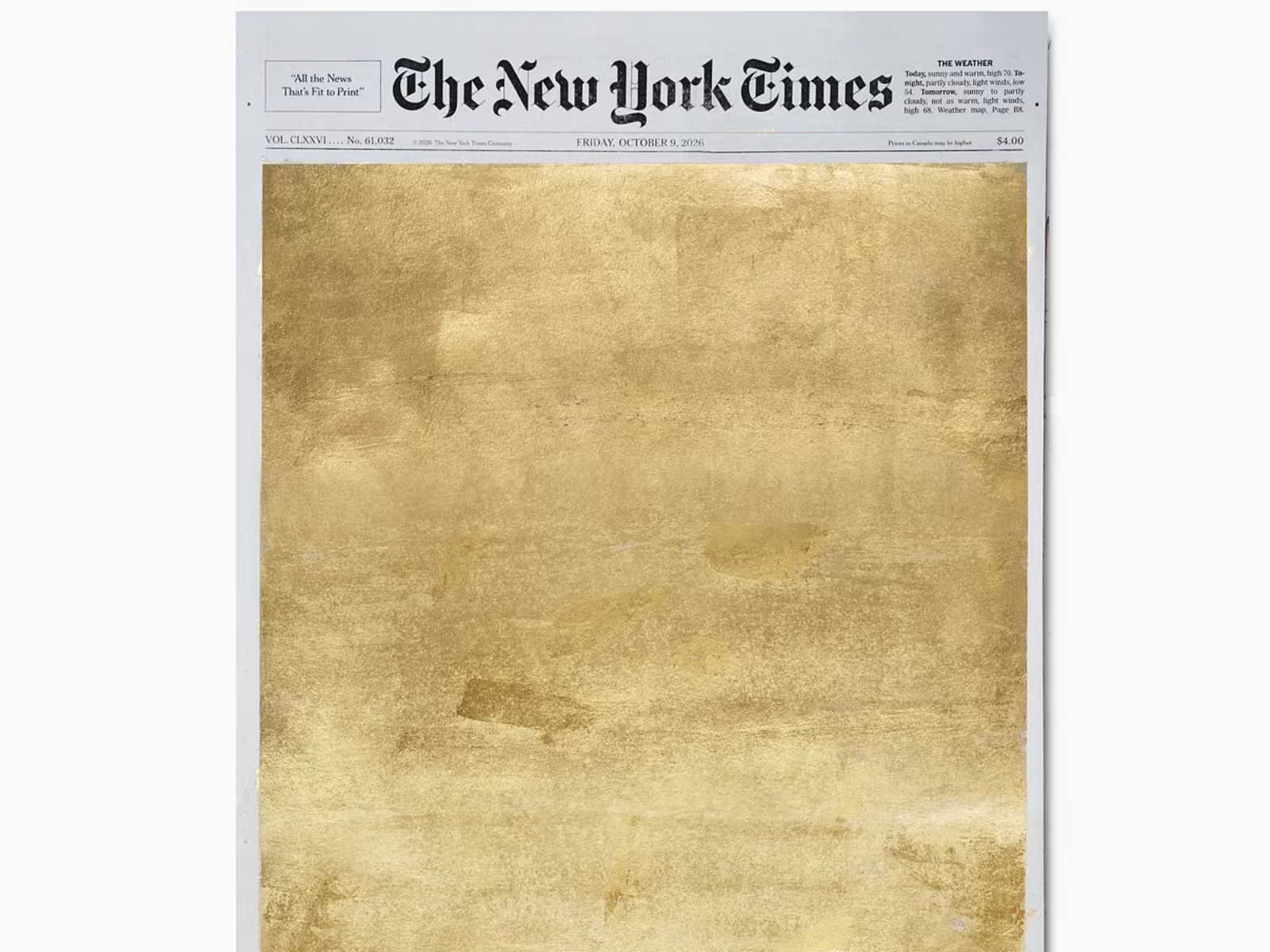
Move Saint Laurent turns The New York Times gold.
On 9 October, Saint Laurent turned the front page of The New York Times gold. No product, no image, just gold. The move ran the same day Saint Laurent announced Anthony Vaccarello was leaving, after a Spring/Summer 2027 show almost entirely in gold.
Signal A colour can become a brand.
Colour is a form of recognition and identity. We recognise Hermès orange without needing to see a name or a logo. Saint Laurent has a relationship with gold - Yves Saint Laurent famously said “I love gold, it’s a magical colour”. With this move the House extended its collection into culture.
Question Can a colour be owned?
Legally sometimes. Tiffany registered its blue as a trademark in 1998 on packaging. But cultural ownership is something different. A colour belongs to everyone. A discussion on ownership misses the point – the real power is when people see the colour and think of you.
2
Move Adidas removes its logo from Messi’s farewell shirt.
Lionel Messi wore a specially designed Argentina shirt for his final international match against Benin on 6 October. The stripes were reworked, gold details were added and the sun from Argentina’s flag was incorporated. But the most symbolic change was on the chest, where Adidas replaced its logo with Messi’s personal gold ‘M’.
Signal Respect is knowing when to step aside.
Part of sponsorship value is brand visibility. Adidas made itself less visible exactly when millions of people were watching. It realised that the player was more important than the brand. The gesture mattered.
Question Should a brand ever disappear?
There are moments when a brand is part of the story, and moments when it should help tell someone elses’. Messi’s farewell was about a player, a country and more than two decades of football. Adidas’s move signalled confidence and humility. It may have stepped aside, but it didn’t disappear.
3
Move Espolòn Tequila offers to pay half the ride home.
Espolòn Tequila will refund 50% of the cost of getting home, up to $25 for rides taken between 9pm and 2am, Thursday to Saturday. Timed for Halloween, “Fare Share” runs until 1 November in the US. A receipt must be submitted.
Signal Responsibility doesn’t end when the product is sold.
For most brands, the client relationship is focused on the moment of consumption. Buy the drink, open the bottle, have a good night. Alcohol brands tell us to drink responsibly without taking responsibility – this move shifts some of it back to the brand. Espolòn may still want us to drink, but it cares about what happens when we do.
Question Where does the role of the brand end?
It used to end at the transaction, but the ride home is part of the drinking experience and another moment where the brand can be useful. We refer to lifetime value as how much value a client can give a brand, but perhaps we should be looking at how much value a brand can create for its client.
That’s this week’s three.
Thank you for reading,
Noorin
Relevant links:
Edition #2: Move 2, “Gold is not just a colour”
Edition #13: Move 1, “The strongest logos no longer need to be seen”
Read past editions of Signals & Moves